Classes
Four stages, and how a child moves through them.
Children are grouped by what they can already do, not by age. A seven-year-old who has drawn for years and a ten-year-old who never has will not be in the same place, and pretending otherwise helps neither of them.
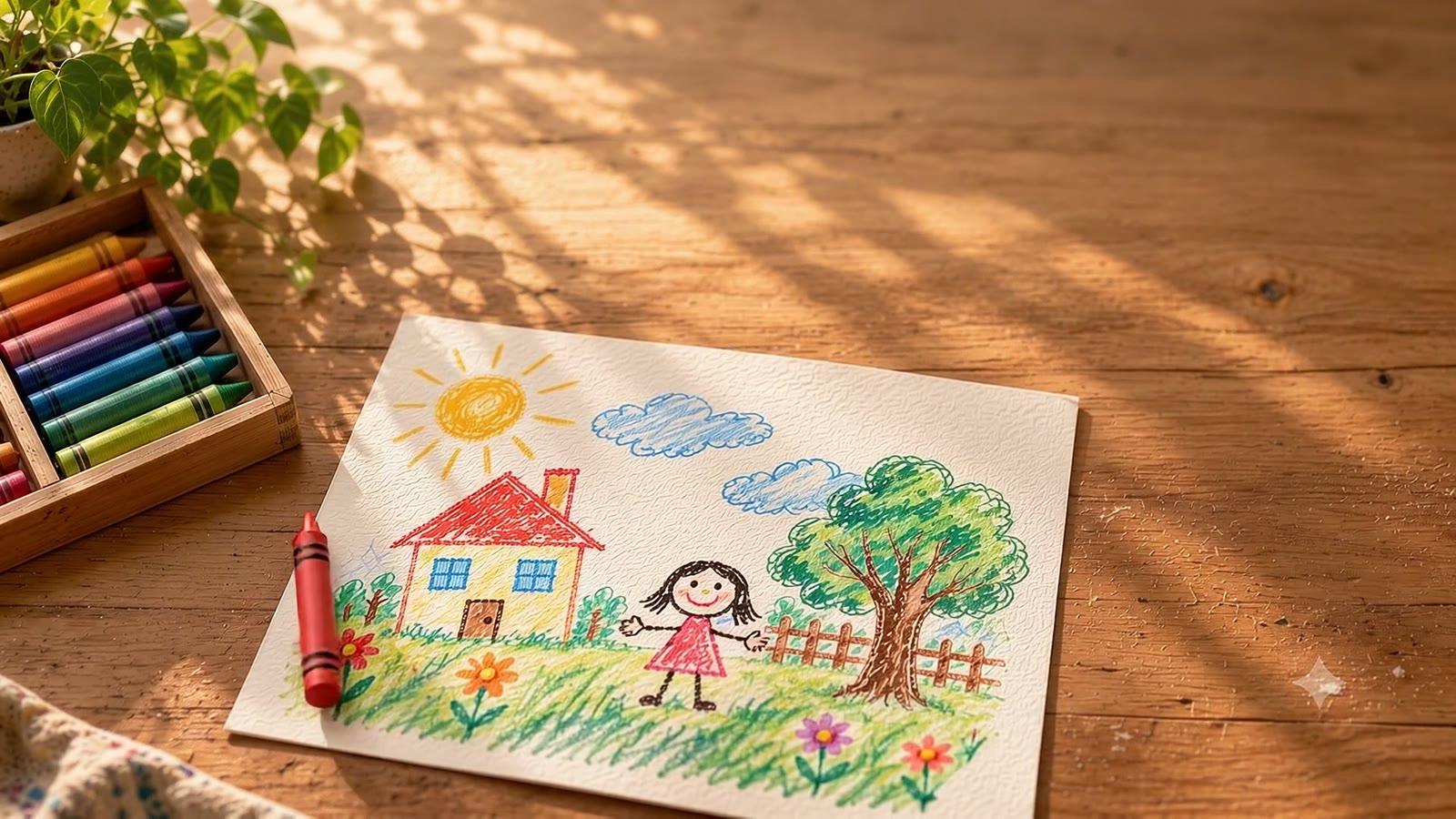
Crayon, oil pastel, sketch pen
Stage One
Line & Colour
Children starting out, usually around 5 to 7
What they learn
- Holding a crayon with control, and drawing without fear of the blank page
- Straight lines, curves and circles: the shapes everything else is built from
- Filling a shape evenly, and staying inside an outline when it matters
- Naming colours, mixing them, and choosing them on purpose
- Drawing from imagination before drawing from a reference
By the end of this stage
Your child can draw a whole scene out of their own head and colour it confidently.
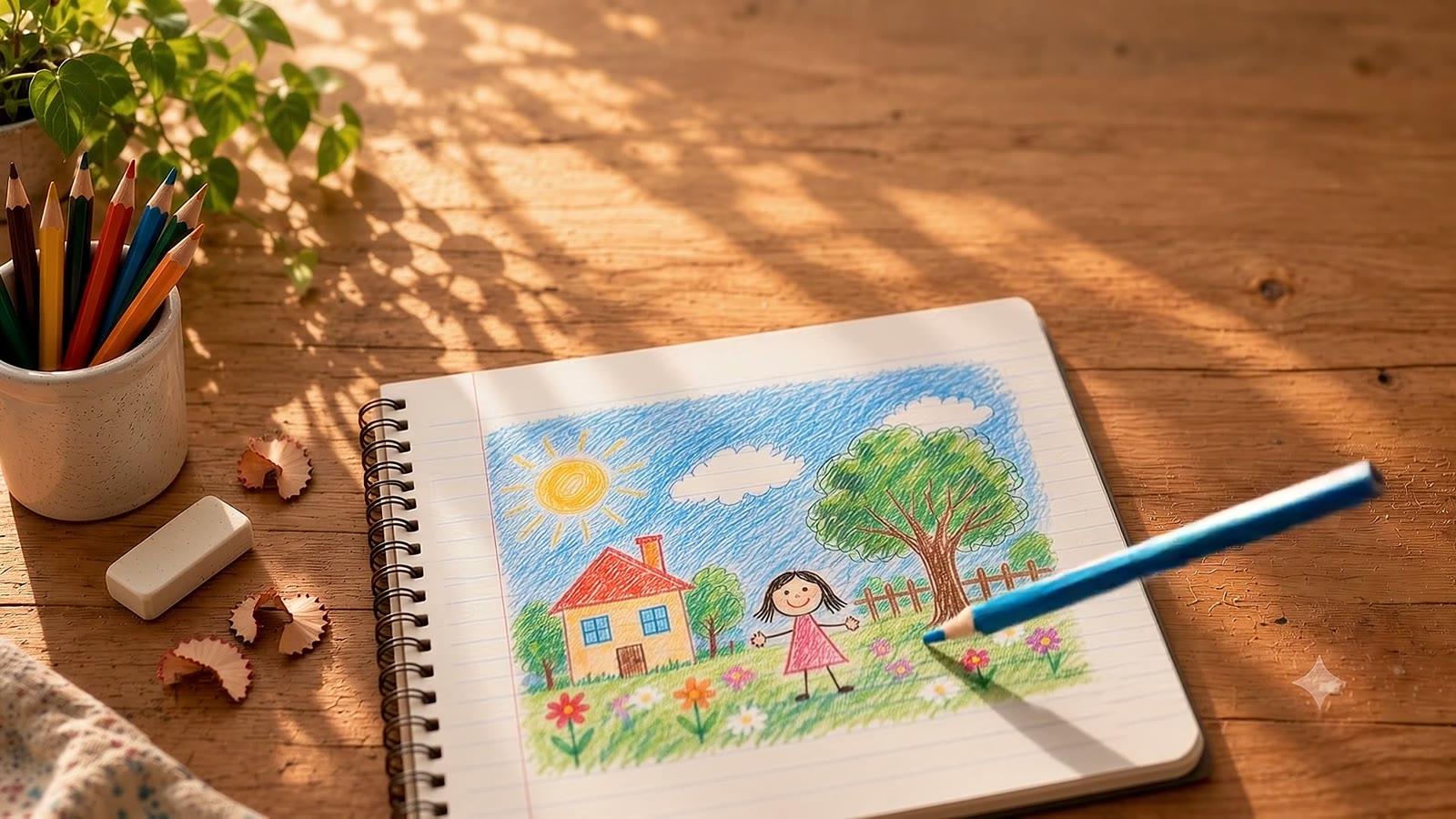
Graphite pencil, coloured pencil, eraser
Stage Two
Sketching & Shading
Children who can already draw a scene and want it to look real
What they learn
- Light and heavy pressure, and what each one is for
- Shading, hatching and blending to make a flat shape look solid
- Proportion: why the door is smaller than the house
- Drawing what is actually in front of them, not what they assume is there
- Using an eraser as a drawing tool, not a mistake tool
By the end of this stage
Your child can sketch from observation, and make a drawing look like it has weight and depth.
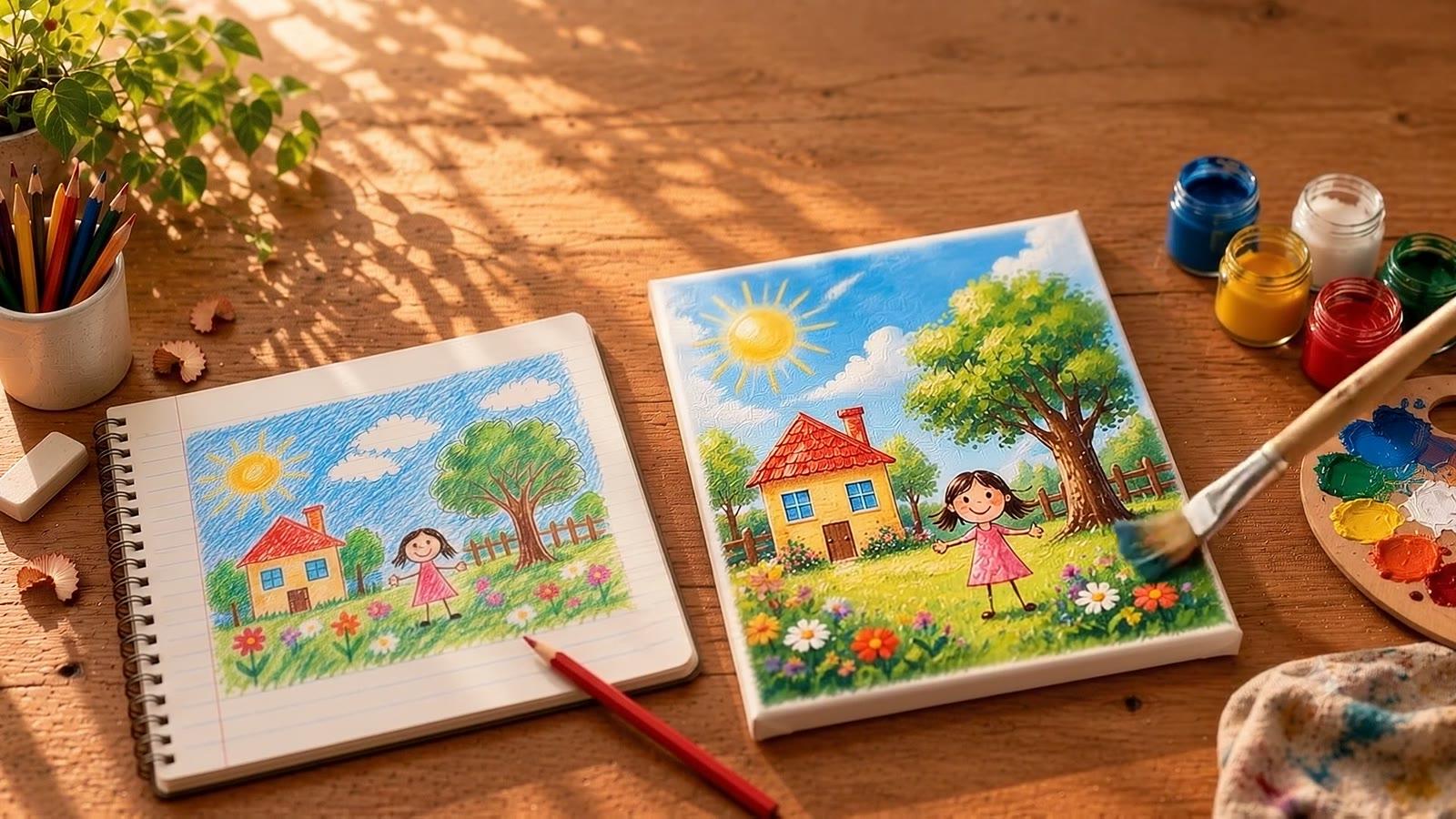
Watercolour, acrylic, brush and canvas
Stage Three
Watercolour & Acrylic
Children ready to work bigger, wetter and messier
What they learn
- Loading a brush, and the difference a wet or dry one makes
- Mixing colour on a palette instead of reaching for a new tube
- Washes, layers and letting a painting dry before going back into it
- Working on canvas: a surface that answers back
- Finishing a piece rather than abandoning it halfway
By the end of this stage
Your child can plan and finish a painting on canvas, and knows why they chose every colour in it.
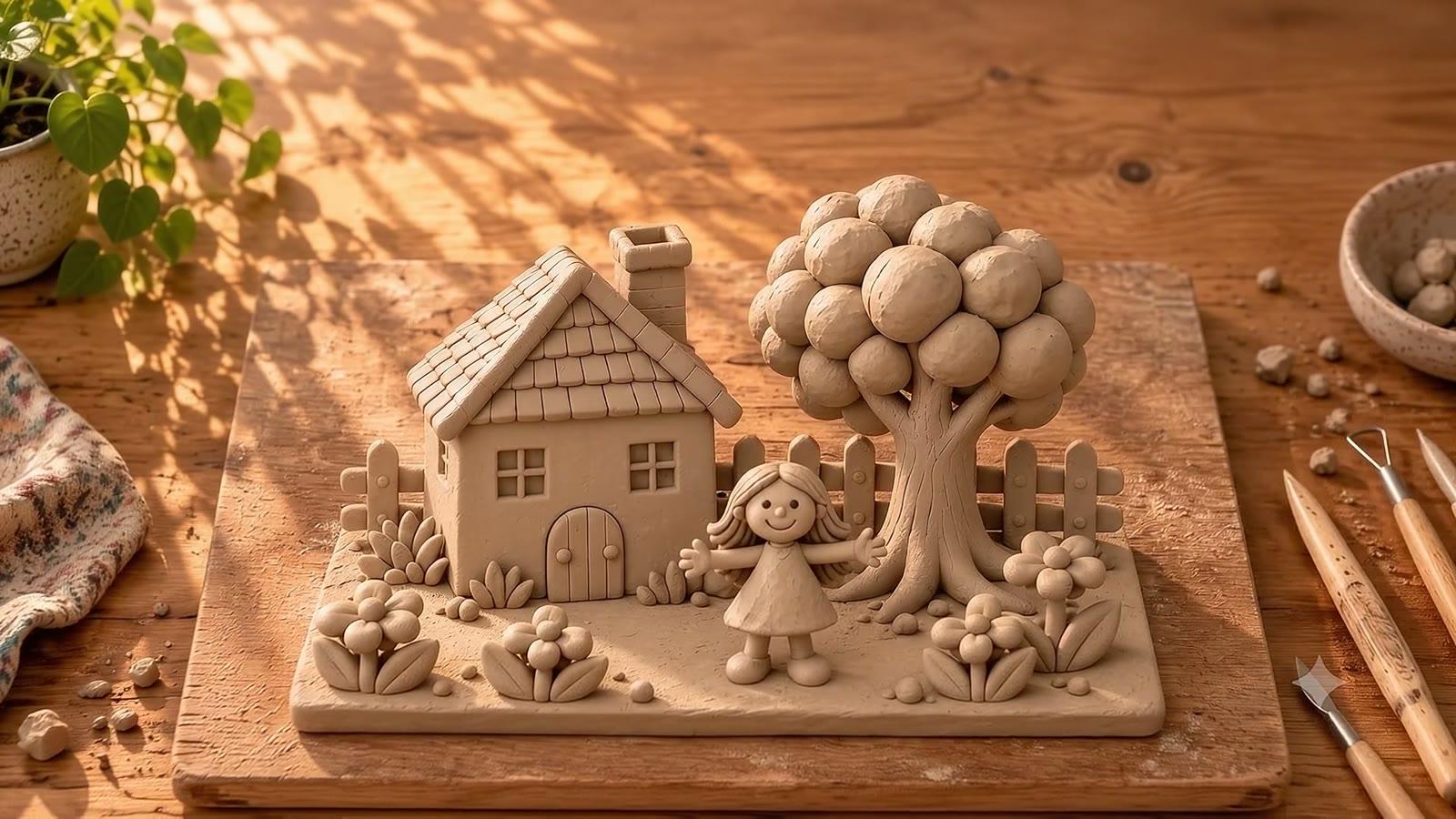
Air-dry clay, modelling tools
Stage Four
Form & Clay
Children who want to make something they can pick up
What they learn
- Rolling, pinching, coiling and joining clay so it holds together
- Thinking about an object from every side, not just the front
- Using tools for texture: bark, roof tiles, hair, cloth
- Balance and weight, and why a sculpture falls over
- Drying, finishing and caring for a piece once it's made
By the end of this stage
Your child can take something they imagined and hold it in their hands.
Fees & timings
₹2,000 a month, everything included.
- Classes
- 2 a week · 8 a month · 90 minutes each
- Days
- Saturdays & Sundays
- Timings
- Timings shared on enquiry
- Fee
- ₹2,000 per month, about ₹250 a class
- Materials
- Paper, crayons, pencils, paint, canvas and clay, all provided
- Batch size
- Maximum 8 children
- Ages
- 5 and above
- Trial
- First class free, no obligation
- Where
- Valasaravakkam, Chennai, exact address on enquiry
Questions
Things parents ask.
Not at all. That's who Stage One is for. Children are grouped by what they can already do, not by age, so a complete beginner starts at the beginning and is never the slowest one in the room.
No. Paper, crayons, pencils, paint, canvas and clay are all included in the monthly fee. Your child just turns up.
Eight, maximum. It's a small studio and that number is deliberate: it's how many children one teacher can actually watch, correct and talk to in a single class.
For the free trial class, yes, especially with younger children. After that we'd gently ask you to wait outside. Children draw very differently when a parent is watching.
Tell us in advance and we'll fit your child into the other weekend batch that month wherever there's space.
A hobby class, honestly. The aim is a child who can make things and wants to keep making them. That foundation does help with drawing exams and portfolios later, but we don't teach to a syllabus.
Usually, yes. Around five is when most children can hold a crayon with enough control to enjoy a full class rather than get frustrated. Come for the free trial and we'll tell you honestly what we think.
Not right now. Classes are for children aged 5 and above. If there's enough interest from parents we'll look at an adult weekend batch later.
In Valasaravakkam, Chennai. It's a home studio, so we share the exact address over WhatsApp once you've enquired rather than posting it publicly.
Message us on WhatsApp, or send the enquiry form at the bottom of this page. We'll reply with the address, the timings and which batch would suit your child.